Unlocking a Challenging Site Through Contemporary Conservation-Led Design
The Garden Pavilion is a low-impact contemporary new build set within the parkland and woodland character of the Bickley Park Conservation Area. Conceived as ancillary residential accommodation, the project transforms a difficult, underused parcel of land into a refined garden retreat that belongs to its landscape rather than competing with it.
The site sits beside a locally listed Arts and Crafts house designed by Ernest Newton, one of the founders of the Arts and Crafts architectural movement. Mature trees, sloping ground, established gardens and generous plots all contribute to the area’s distinctive character. Any new building here needed to preserve the sense of openness, protect the tree-lined setting and remain visually subservient to the surrounding architecture.
E2’s proposal is a discreet single-storey pavilion, carefully positioned within the natural screening of the site. It sits lightly above the ground on a steel frame and piled foundations, minimising disturbance to the existing landscape. A planted intensive green roof softens the building’s presence, while dark timber weatherboarding helps the pavilion recede into the tree bark, shadow and foliage around it.
The result is a contemporary intervention shaped not by the desire to fill a plot, but by the discipline of knowing how little a sensitive site should be asked to carry.
Succeeding Where Previous Planning Applications Had Failed
This was a site with a difficult planning history. Earlier attempts to develop the land had been refused, including a proposal for a detached two-storey five-bedroom house and a later three-bedroom gatehouse or lodge-style dwelling. The reasons were instructive: previous schemes were considered harmful to the character and appearance of the Bickley Park Conservation Area, too prominent in their design and orientation, damaging to trees and shrubs, and detrimental to the park-like setting that defines the area.
The challenge for E2 was to look at the site differently. Rather than treating the land as a conventional infill development opportunity, the design had to begin with the landscape, the trees, the neighbouring homes and the conservation area. The mature boundary planting was not an obstacle to overcome; it was the essential character of the place. The sloping ground was not simply a technical problem; it was part of the reason the site felt open, layered and garden-like.
E2 identified a series of design constraints that became the foundation of the planning strategy. The new building needed to sit behind key views of the locally listed house, avoid tree root protection zones, retain openness around the boundaries, stay below the eave’s height of the neighbouring building and leave the existing ground as undisturbed as possible.
Experience the Concept Design in 3D
Our Approach | A Pavilion Floating in the Clearing of the Woods
E2’s approach was conservation-led, landscape-first and deliberately restrained. The design concept was for a single-storey contemporary pavilion that appears to float within a clearing, screened by mature trees and set back from the boundaries to preserve the spacious, park-like quality of the conservation area.
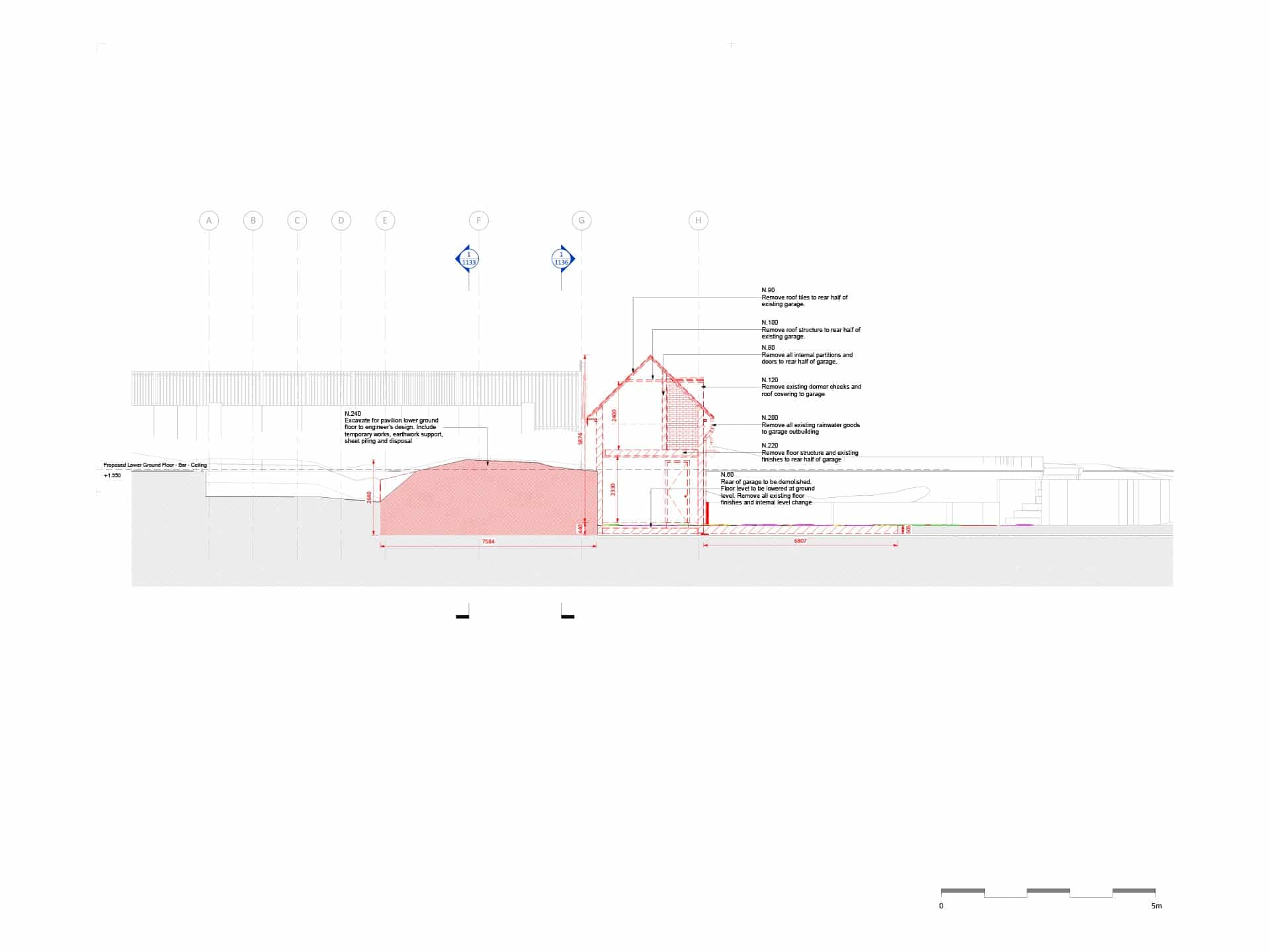
The building is placed and orientated to reduce its apparent mass, scale and bulk. Its low roofline ensures it remains subservient to neighbouring buildings, while its position protects important views of the locally listed Arts and Crafts house. The proposal also includes the partial removal of the rear of the existing garage, allowing a new external roof terrace to connect the main house and the pavilion while keeping the two buildings clearly distinct.
Protecting the Landscape
The landscape strategy was central to the success of the scheme. Mature trees along the boundaries provide natural screening and make a strong contribution to the conservation area. E2’s proposal works with this condition, retaining and reinforcing the woodland setting while replacing affected trees where necessary.
The building sits on piled foundations and a steel frame, leaving much of the ground beneath and around it minimally disturbed. This approach reduces impact on the site and helps preserve the natural character of the land. The pavilion is not presented as a new object on a cleared plot, but as a lightweight structure carefully inserted into an existing garden landscape.
A Green Roof That Extends the Garden
The intensive green roof is one of the most important design moves. From neighbouring properties and elevated views, the roof reads as a continuation of the garden rather than a conventional building surface. It helps preserve the openness of the site and supports the wider parkland character of Bickley Park Conservation Area.
This green roof also gives the pavilion a softer relationship with its surroundings. The architecture becomes less about visual assertion and more about concealment, texture and seasonality.
Contemporary Materials, Subservient Presence
The material palette is deliberately quiet and high quality. Dark timber weatherboarding is arranged vertically to the external walls, with horizontal boarding to the flat roof fascia. A black stained or charred timber finish allows the pavilion to sit naturally among tree trunks, shadows and foliage through the changing seasons.
Natural oak window and door frames provide a refined contrast to the dark timber, while flat steel railings preserve views between the interior and the surrounding garden. Together, these materials create a contemporary building that feels elegant, precise and recessive.
Planning Permission for a Contemporary New Build Through a Holistic Reading of the Site
The Garden Pavilion demonstrates how sensitive sites can be unlocked through careful architectural thinking. E2 succeeded by responding directly to the reasons earlier applications had failed. The proposal avoids overdevelopment, protects the conservation area’s park-like setting, respects the locally listed house and uses the site’s mature trees and level changes as design assets.
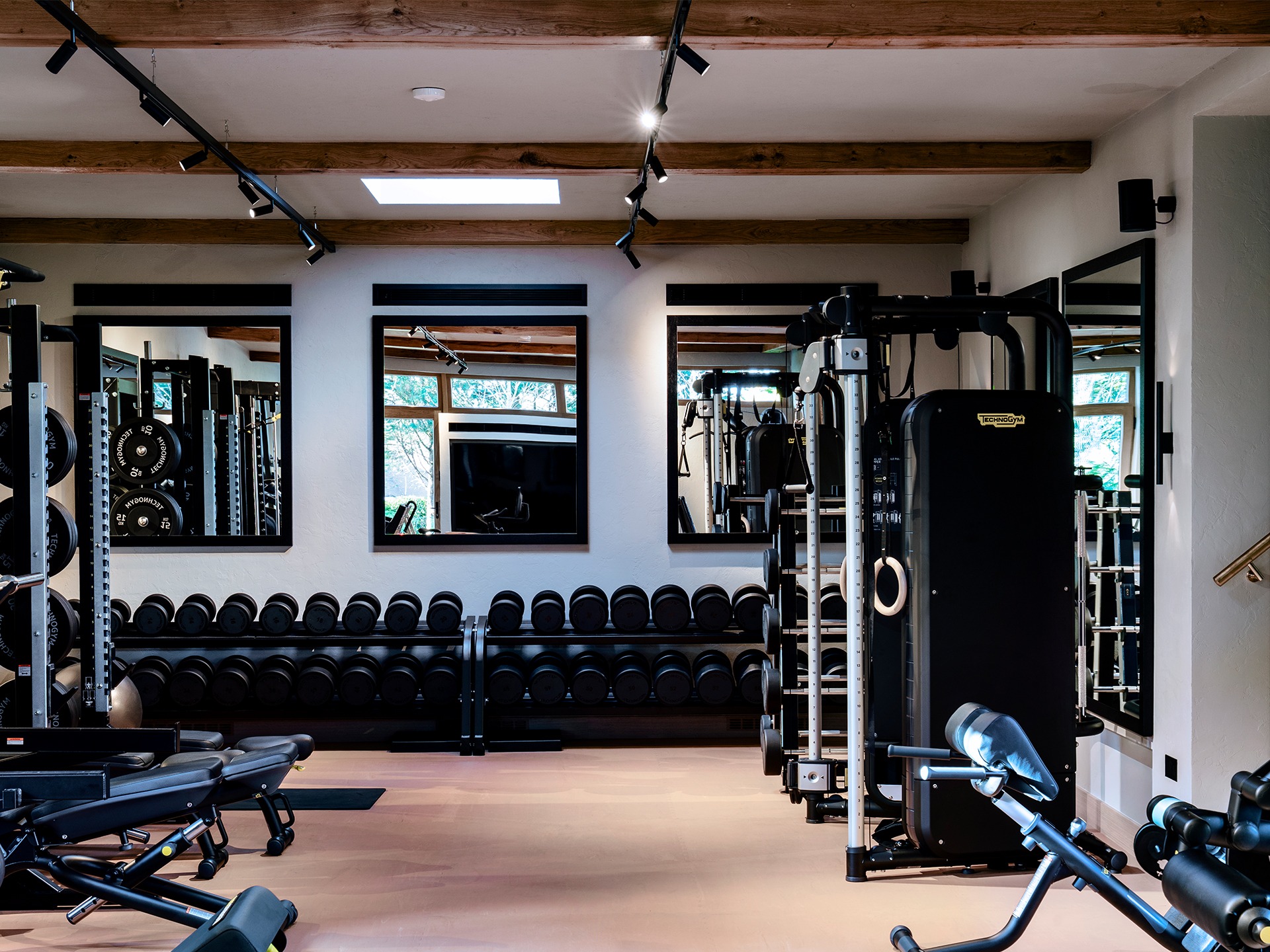
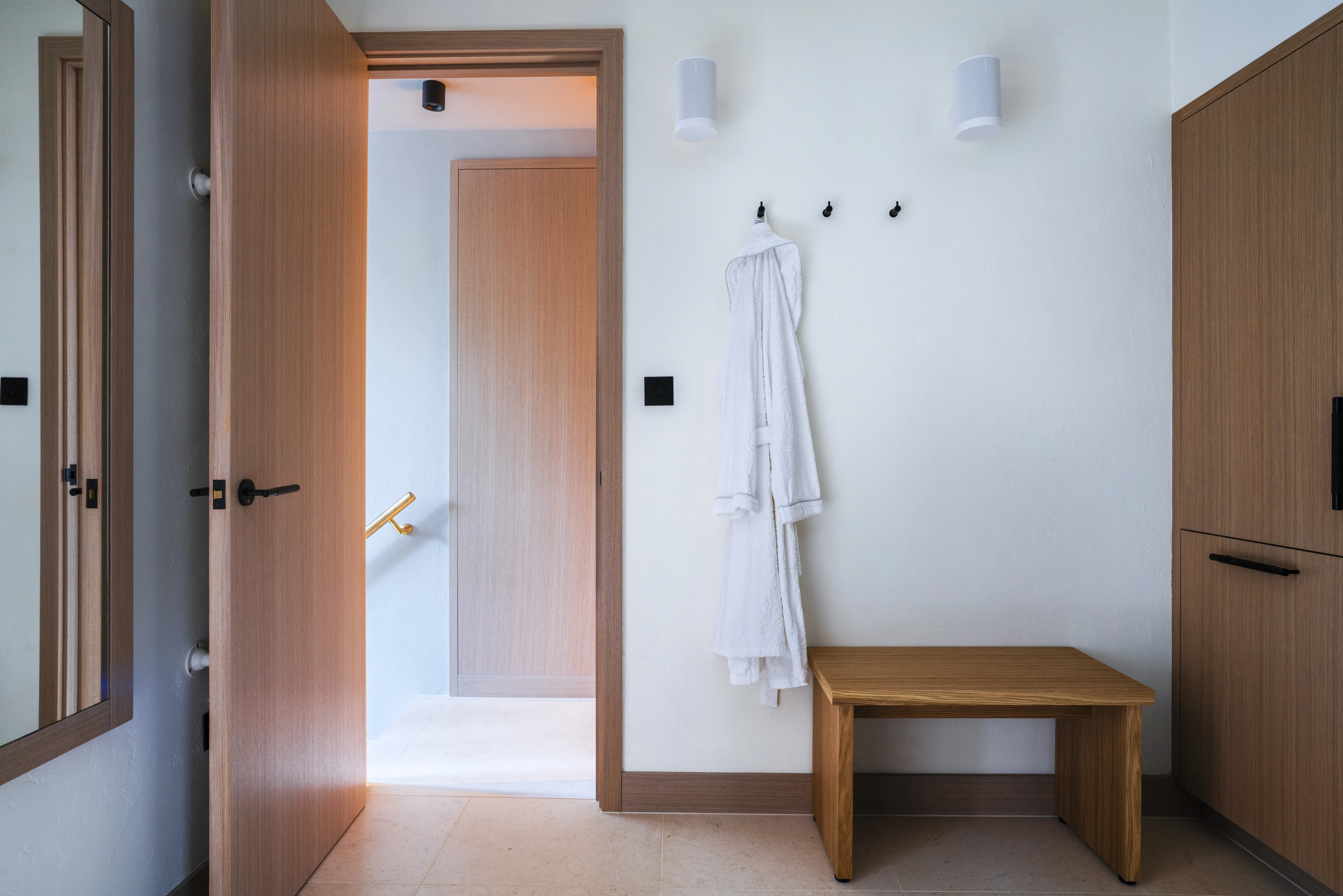
The pavilion provides valuable ancillary accommodation while remaining modest in scale and low in visual impact. Internally, the accommodation includes leisure and wellness spaces arranged around the garden setting, including a gym, treatment room, hydropool, sauna, steam room, shower and changing facilities, with ancillary spaces integrated discreetly into the plan.
Externally, the building is experienced as a quiet contemporary pavilion in the landscape. Its green roof, dark timber, planted setting and elevated construction allow it to settle into the site rather than dominate it.
For the client, E2 transformed a problematic piece of land into a beautiful, usable and valuable addition to their home. For the conservation area, the project enhances a previously sterile and underused plot without eroding the qualities that make the setting special.
The Garden Pavilion also reflects E2’s collaborative approach to architecture and interiors.
Working alongside Interior Designer Jess Bing from Cooper & Cooper Interiors, E2 established the spatial concept and interior architecture, creating the framework for a highly personalised leisure retreat. The brief combined a bar, gym, spa, treatment room, sauna and outdoor wellness deck within a single self-contained pavilion.
The interior was designed as two distinct experiences. At lower ground level, a richly detailed private bar creates a theatrical atmosphere with backlit yellow onyx, mirror-tiled surfaces, malachite finishes and warm brass accents. Upstairs, the mood shifts to a calmer wellness environment, where polished plaster, washed oak, zellige tiles and natural materials create a restorative and tranquil setting.
The result is a contemporary retreat designed for entertaining, wellbeing and relaxation – demonstrating how architecture and interiors can work seamlessly together to create spaces that are both highly functional and deeply personal.
Have you got a similar project in mind? Get in touch for your initial consultation
Contact Us
Join our newsletter for planning tips, project inspiration and heritage insights.