
Learn how E2’s eco architects design contemporary sustainable homes that balance style, performance, and environmental responsibility.
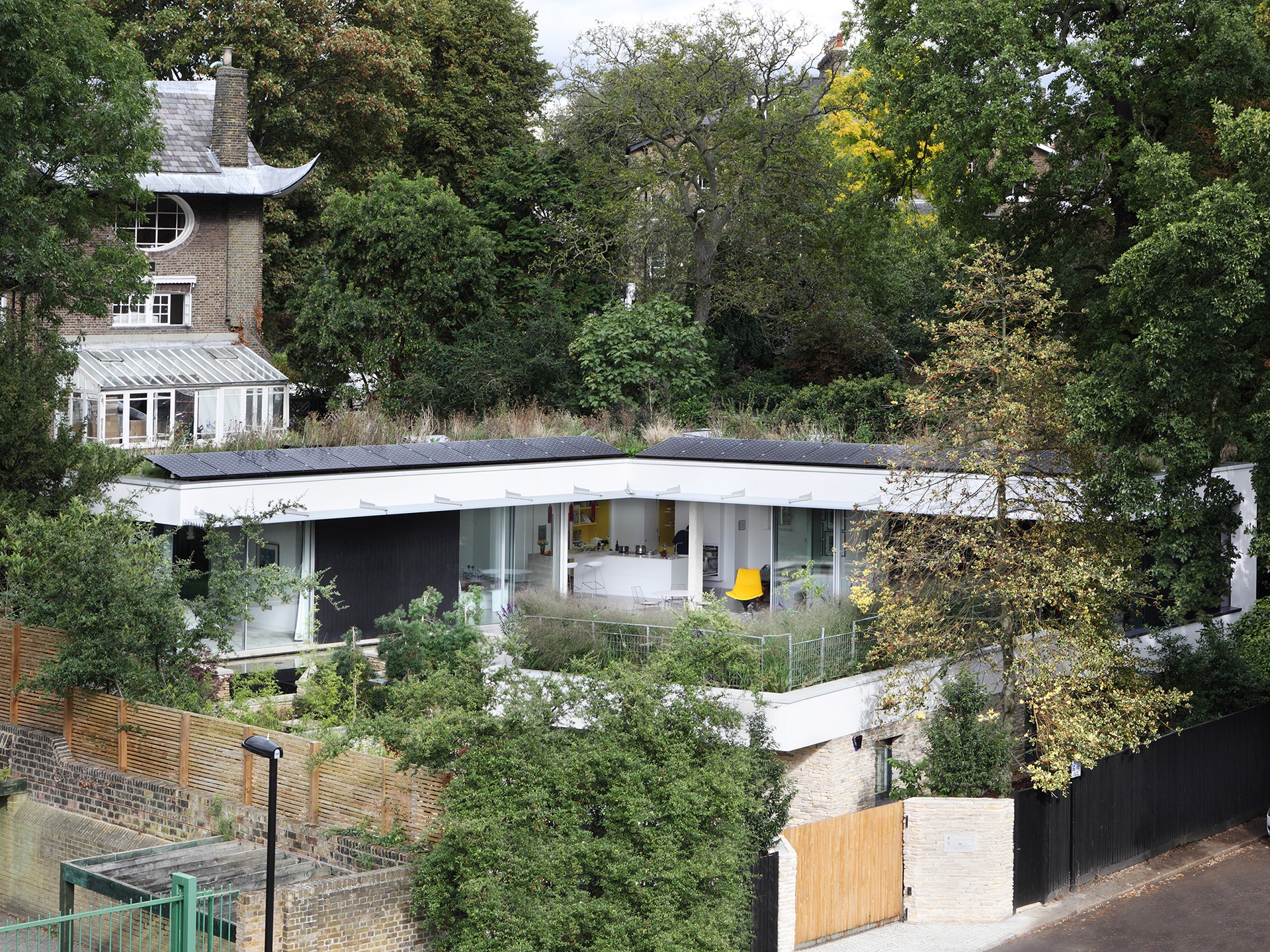
(Private Residential | The Pavilion by E2. This project explores sustainable building design with eco-friendly architecture principles. Nestled in the Blackheath Conservation Area. Learn more about this project)
Designing a truly sustainable contemporary home takes more than adding solar panels or choosing the right insulation. It means thinking holistically – about the building’s impact, materials, longevity, and the way it’s experienced by the people who live in it.
At E2 Architecture, we believe the most sustainable homes are those that last – homes that sit lightly on the planet but stand strong for generations.
From passive design and sustainable materials to navigating complex planning and heritage settings, this article explores how we approach sustainable house design – and how to get it right from the start.
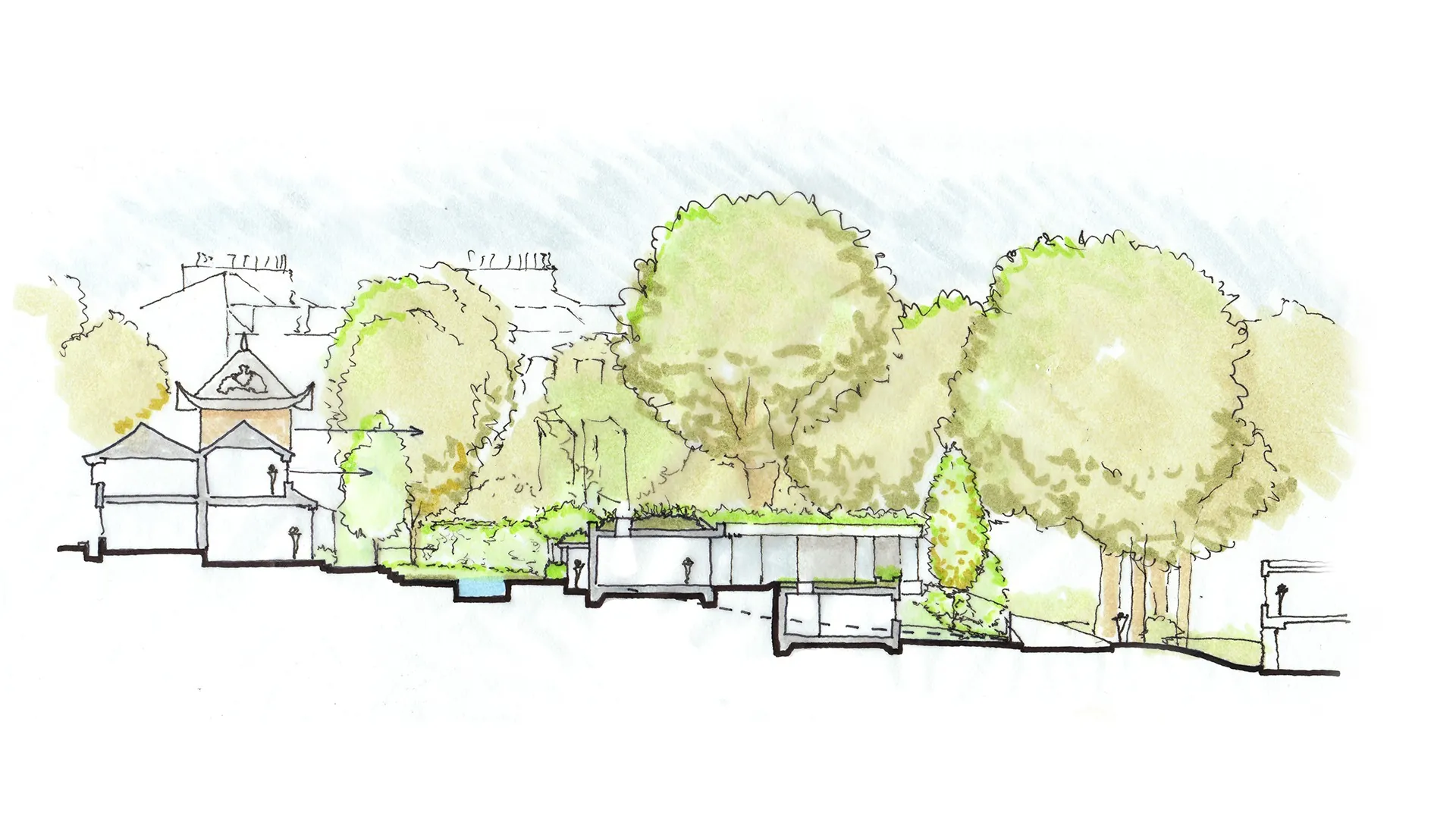
(Private Residential | The Pavilion by E2. Initial sketch design testing the level changes and relationship with the landscape. Learn more about this project)
When we talk about sustainable design, we look at the whole life of a building – its environmental impact before, during, and after construction. There are three key areas of environmental impact:
The best sustainable homes are designed with these stages in mind. Quality, durability, adaptability, and material choices all play a role in reducing impact across the building’s entire life.
A sustainable house isn’t necessarily a “new” house. In fact, the most environmentally friendly building is often the one that already exists.
Reusing existing structures saves the carbon already embedded in the original materials. At E2, we specialise in working with heritage buildings, combining careful restoration with modern energy-saving techniques.
But when a new home is required, we apply the same thinking – selecting low-impact materials, optimising the building’s orientation, and designing for comfort and light.
If building a new house – the key to sustainability is quality. If you’re designing and building with quality, the building will be built to last. People will appreciate the quality, so there won’t be as much need or desire to alter or demolish it. People will enjoy living in it and it should be healthier for them to live in it.
So, what is a contemporary sustainable house? Much of the conversation around sustainability is about engineering – you can largely apply different architectural styles, but there is a contemporary aesthetic that has emerged around sustainability.
This is at the heart of the E2 style and contemporary approach:
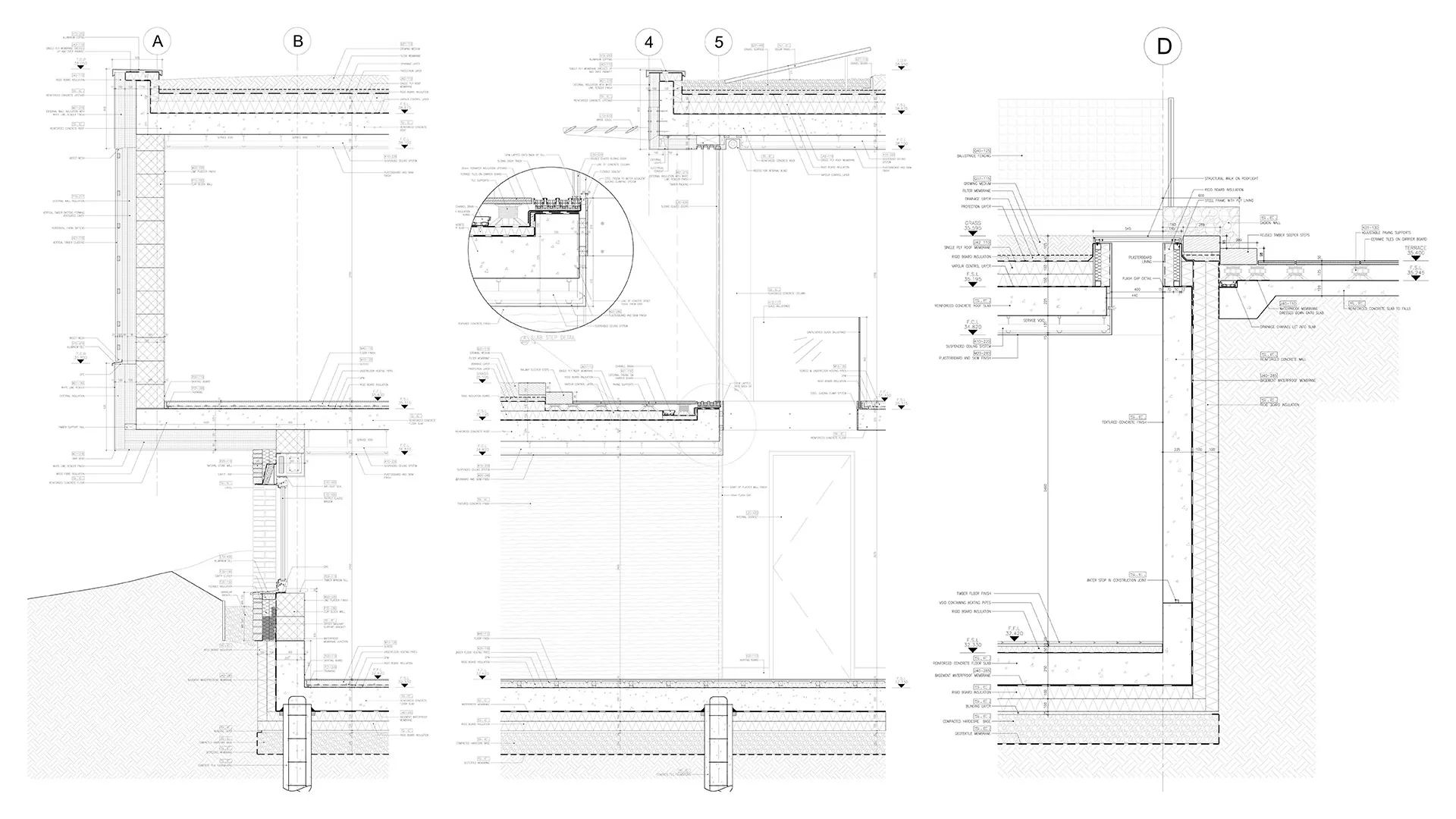
(The Pavilion by E2 | Construction detail drawing at the end of RIBA Stage 4 – Techinical Design. Learn more about this project)
Sustainable design starts long before the first brick is laid. Here are some of the key strategies we use at E2:
Passive design is all about working with the environment rather than against it. By carefully orientating and locating a house on its site, we can take full advantage of the local climate to naturally heat, cool, and ventilate the building – reducing the need for mechanical systems.
Traditionally, a building’s biggest energy demand has been space heating, but increasingly it’s also about preventing overheating. The aim is to capture as much low winter sun as possible, while limiting exposure to harsh summer sunlight. In the UK, that often means larger openings to the south and good control of shading on other elevations.
We also consider prevailing winds and natural airflows to create comfortable ventilation without relying on active systems. Combined with thoughtful window placement, this can significantly reduce energy consumption while improving comfort.
Once we’ve optimised how the building responds to its environment, the next step is to make the fabric of the building work as efficiently as possible.
Insulating well, reducing unwanted air leakage, and using the building’s mass to balance internal temperatures all help to create a naturally stable environment. A material with high thermal mass, such as stone or concrete, absorbs heat slowly during the day and releases it at night, smoothing out temperature peaks and troughs.
Good airtightness is equally important – think of it like “zipping up your coat and tucking in your jumper.” By minimising uncontrolled air infiltration (no leaky windows or gaps around doors) and combining that with smart ventilation systems like MVHR (Mechanical Ventilation with Heat Recovery), we maintain excellent indoor air quality while minimising heat loss.
Together, these passive design and fabric-first principles drastically reduce a building’s energy demand before any active systems are introduced – ensuring sustainability is built in from the start, not added on at the end.
Generally electric systems are recommended and if you can, use a heat pump as you will get three times as much heat from a heat pump as you would from 1 unit of electricity.
Environmentally friendly materials such as timber, lime plaster, and recycled steel are ideal sustainable materials.
If you construct your house mostly out of timber – in theory the construction of it could be carbon negative because you’re locking up carbon into the structure and preserving it in place.
E2 really likes to use natural fibres as an insulation material because you are also locking up carbon, whereas most insulation materials are either oil based or mineral based and have very high embodied energy and are very toxic when burnt. Natural fibres are also breathable (in combination with lime plasters and renders) and can help enhance the internal air quality as they will control the humidity and to a certain extent absorb pollutants.
Elsewhere, E2 uses recycled materials as much as possible.
E2 would always advocate rain water harvesting at least for use in the garden and if you can for flushing toilets. Low flush toilets and low flow rate showers are also great water reduction strategies.
It’s handy to be able to turn heating off from your phone or to automatically draw your curtains, but we do not feel these are key essentials for a sustainable home.
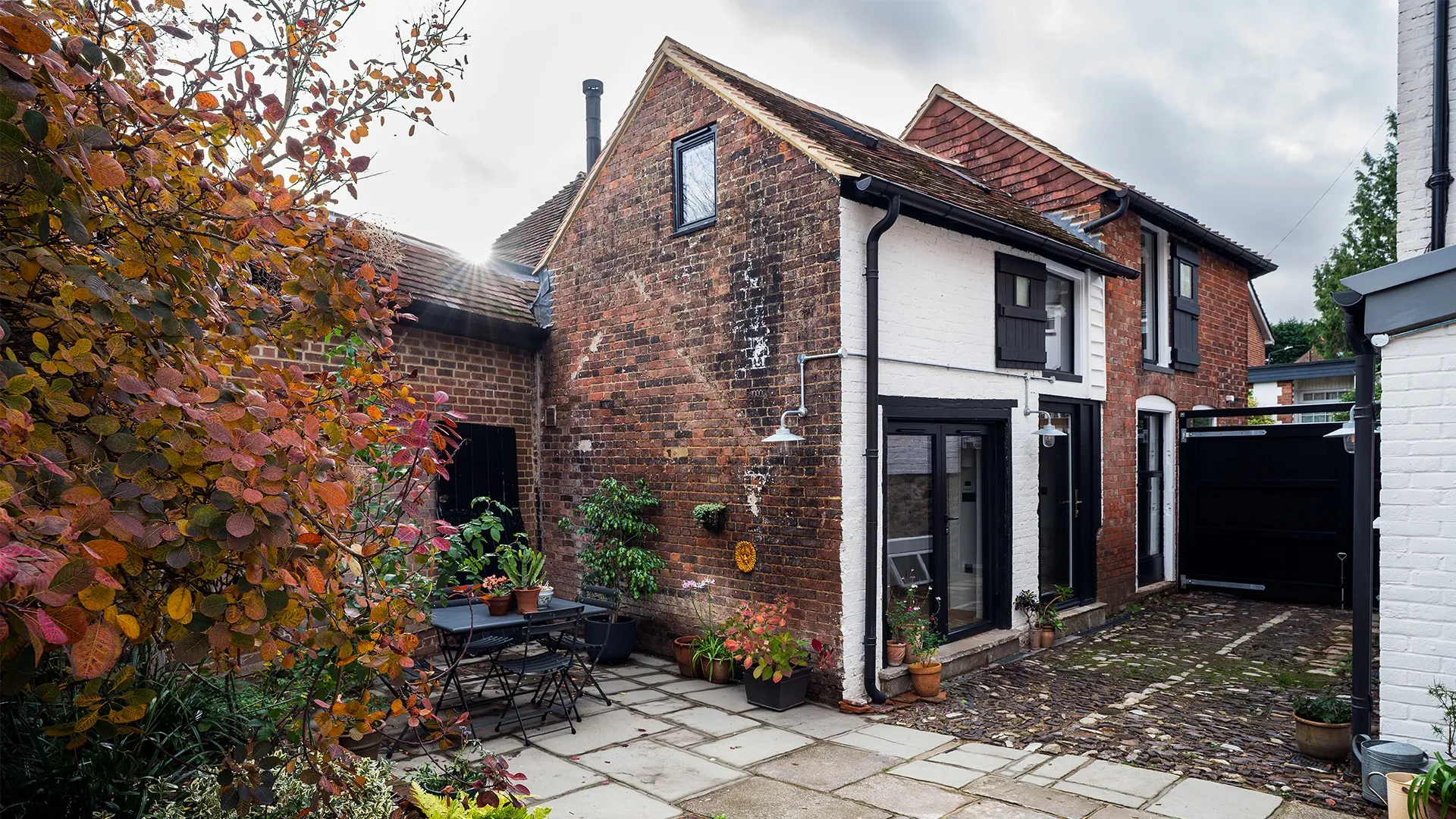 (Private Residential | Chipstead Lane, Following the Architect’s Home Visit, the brief was for a home that could support intergenerational living without compromising the building’s heritage character. Learn more about this project)
Sustainable architecture is evolving fast. The most forward-thinking homes now include:
Each of these innovations supports a shift towards buildings that are not only efficient but enjoyable to live in.
Building sustainably doesn’t automatically mean your project will pass planning easily.
While both national and local policies increasingly encourage sustainability, proposals still need to respect heritage, character, and context – especially for listed buildings and conservation areas.
National and local policies can place lots of demands on sustainability, for example for new buildings to exceed current building regulations.
Sustainability reports and energy assessments can help demonstrate that you are hitting the standards that have been stipulated by a planning condition. The market is starting to recognise these and people are starting to demand it. The most useful one is the passive house – E2 tends not to use them unless we need to for building regulations.
E2’s conservation-accredited architects are used to navigating these complexities. We’ve worked with local authorities and heritage bodies across London and beyond.
Insulating historic buildings needs to be carefully considered so as not to cause harm to the existing structure and how it is intended to function. Insultating listed buildings requires listed building consent. E2 are expert at retrofitting existing structures to improve comfort and performance at the same time as ensuring the dynamics of the structure are maintained.
We also advise on Permitted Development rights, and when planning permission is required, helping clients plan and progress projects that are both achievable and environmentally sound.
Sustainability as a principal and in terms of quality, runs through everything that we do at E2.
We could happily point to any project and talk endlessly about the sustainable features that are in it. We are always looking to reduce demand, minimise waste and reuse as much as we can – it’s a fundamental part of how we work and what we do.
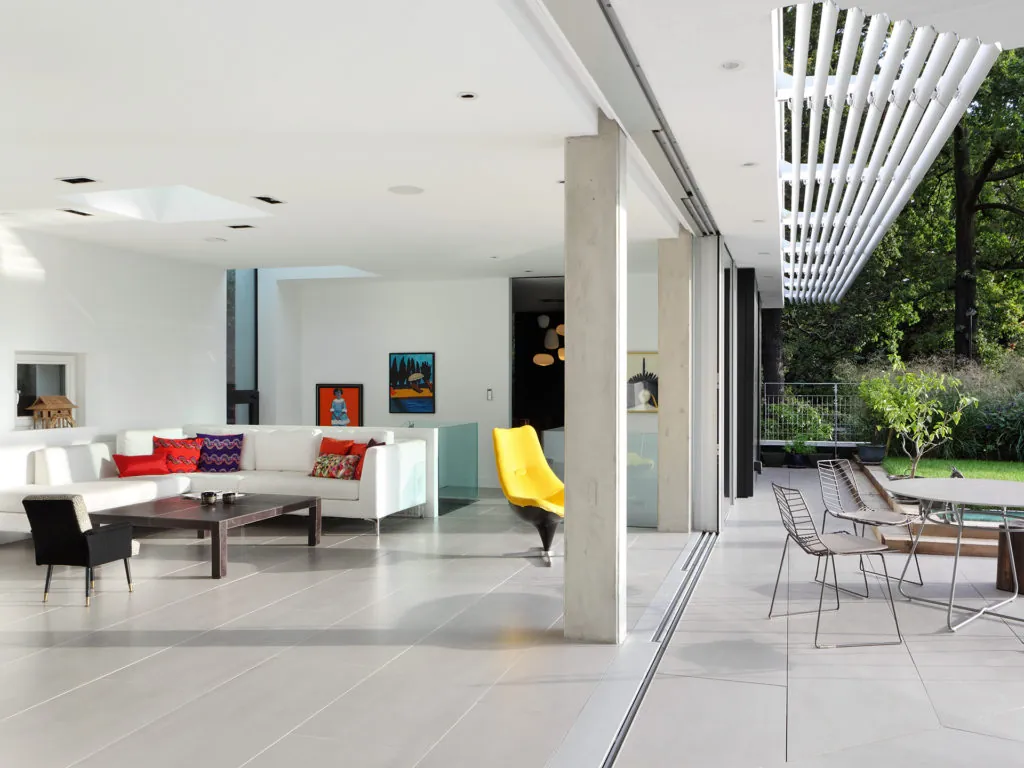
(Private Residential | The Pavilion by E2. A perfect example of blurring the lines between inside and out. The architecture provides the natural connection with the garden from various viewpoints and thresholds. Learn more about this project)
The Pavilion, Blackheath
This zero-carbon home in Blackheath demonstrates how sustainability can drive exceptional design.
Built beside the Grade II* listed Pagoda, the Pavilion sits within a conservation area surrounded by mature trees. Despite tight site constraints, we achieved a light-filled, contemporary home using clay block walls, timber partitions, and concrete with recycled aggregate.
The design maximises daylight and ventilation while maintaining privacy. Its green roof, passive solar orientation, and thoughtful detailing helped the project win awards including The Sunday Times British Homes Award.
The Pavilion stands as proof that with the right approach, “eco” can also mean elegant.
It looks like a modern building but most of the structure is clay block, the partitions are timber stud, and the concrete is with recycled aggregate and steel. This construction material palette is the same as what E2 use in the more historic conversions and retrofits we specialise in.
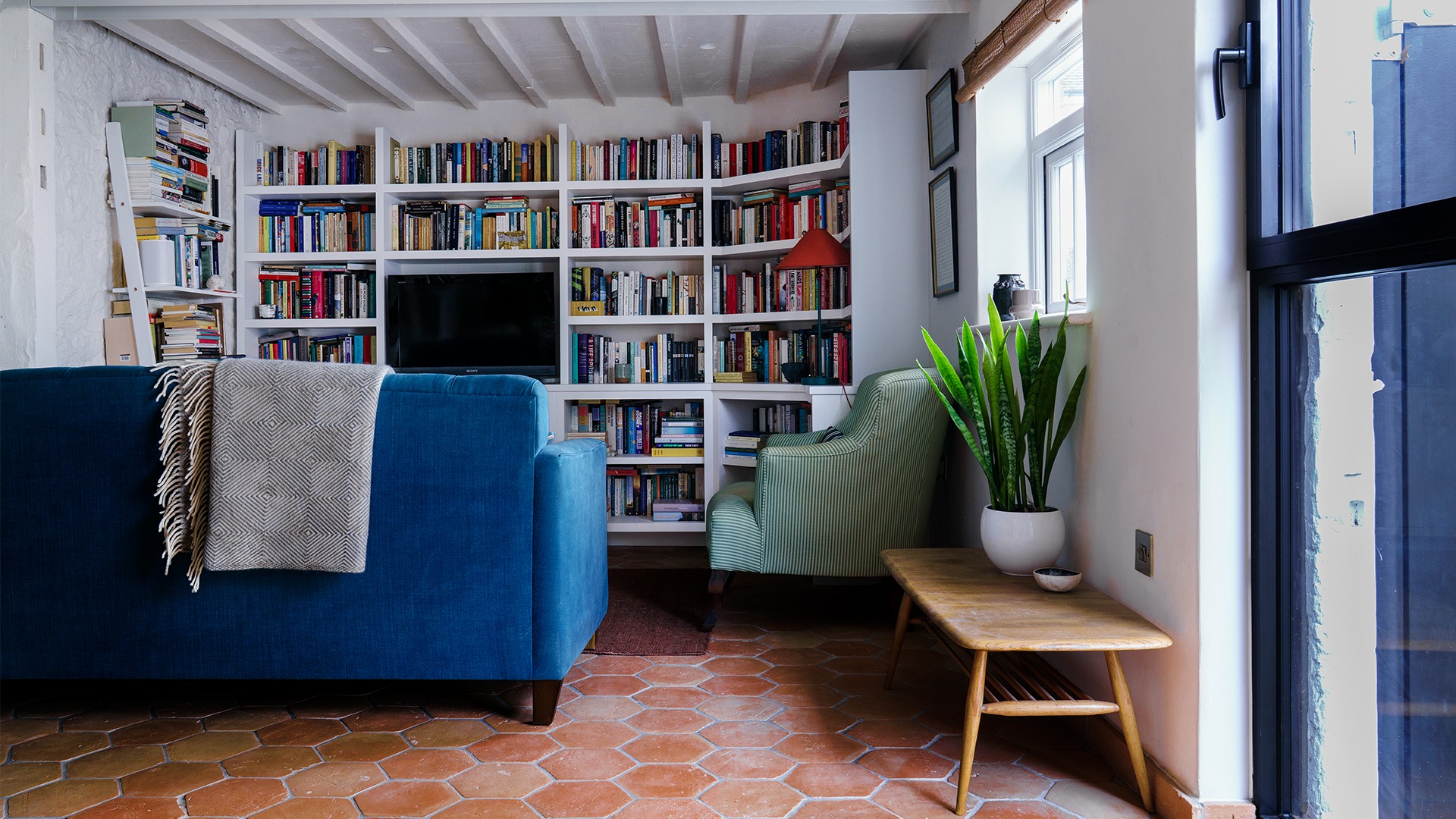
(Private Residential | Chipstead Lane, the challenge included creating usable spaces within the outbuilding, improving thermal comfort with sustainable materials, navigating planning permission and listed building consent while preserving historic fabric. Learn more about this project)
Chipsted Lane – converted barn into one bed annex – It is always a challenge to turn a structure built out of necessity to shelter machinery and livestock into a habitable space. Chipstead Lane barn was a small ‘multi-barn’ built over a number of phases, with some of the oldest ragstone walls estimated to be 300 years old. other walls were timber frame with tile hung cladding and solid brick wall. The structures had to be consolidated with minimal intervention and the external envelope made weather tight with rainwater management improved. The building interior could then be made comfortable with insulated and finished insternallty. with wood fibre insulation, with lime plasters. These have the advantage of being flexible to fit the uneven surfaces, and breathable to avoid trapping moisture in the construction. Some of the stone has been left exposed to act as a thermal store, to regulate heat fluctations.
The result is a warm and dry home that maintains the rural character and textures, with very low embodied carbon.
Working with an experienced sustainable Architect means you’ll have someone who understands both design ambition and environmental responsibility.
At E2, we’re known for combining contemporary design with deep conservation expertise. We regularly help clients gain planning consent where others have failed, and we bring the same thoughtful approach to every home – whether it’s a new build, retrofit, or listed property.
Our holistic approach considers creating a high quality environment that’s comfortable and enjoyable to be in, whilst minimising its impact on the globe.
If you’re planning a sustainable home or want to improve the efficiency of your existing building, to make it more comfortable and easier to heat, we’d love to help.
The responsibility that Architects have towards the environment is best exemplified in the words of the visionary Dr Jane Goodall in her final public address at the World Design Congress, where she reminded us of the crucial role that design, including Architecture can play in shaping a better future:
“You have the creativity, the skill and the power to redesign the world, not just for efficiency or beauty, but for survival, for our children and theirs, regeneration for hope.”
This is something that we hold close at E2. Get in touch to start a conversation and find out how we can support you in your project.
Director – BA (Arch), Dip Arch, RIBA CA
Sam Cooper is a Chartered Architect and RIBA Accredited Conservation Architect with over 20 years’ experience working on listed buildings, heritage properties, and sustainable contemporary design. As Founder and Director of E2 Architecture + Interiors, he leads projects that balance innovation with respect for history — a philosophy he calls contemporary conservation.
Sam specialises in navigating complex planning and listed building consent, often achieving success where others have struggled. His work brings together environmental design principles and a deep understanding of architectural heritage to create projects that are both forward-looking and timeless.
> Do I need planning permission for a side return extension in London?
In many cases, side return extensions fall under permitted development rights. However, this depends on the size, height, and whether your home is in a conservation area or a listed building. It’s always best to get professional planning permission advice before starting.
> What happens if I build without planning permission?
Building without planning permission can lead to serious consequences. The council may issue an enforcement notice requiring you to undo the work, and it can also cause problems if you decide to sell your property. The safest approach is to confirm requirements before you begin.
> Can I get planning permission retrospectively?
Yes, you can submit a retrospective planning application. However, there is no guarantee it will be approved. If refused, you may need to reverse the work. Working with experienced residential architects in London helps reduce the risk of refusal in the first place.
> Do I need an architect for an extension in a conservation area?
Absolutely. Extensions in conservation areas require sensitive design that respects the heritage of the area. A listed building specialist or conservation architect like E2 can help you navigate the process and secure consent, while designing something that enhances your home’s value.
📩 Thinking of contemporary sustainable home?
Get in touch with E2 for a free discovery call or architect home visit.
Join our newsletter for planning tips, project inspiration and heritage insights.